
In short: empadronamiento is registration in the padrón municipal, the register of people who habitually reside in a municipality. It is a duty of everyone living in Spain, including foreigners, regardless of legal status (art. 15, Ley 7/1985).
In person or by representative? You normally go in person to the Ayuntamiento (with a prior appointment), although some municipalities allow it online or by post. The exact procedure varies by municipality; check yours.
The padrón does not prove legal residence and does not legalise migratory status: article 18.2 of Ley 7/1985 states that registering foreigners "does not constitute proof of legal residence in Spain, nor grant any right not conferred by current law". Even so, it is usually a precondition for the health card, schooling of minors, proving permanencia for arraigo and many benefits. Registration is handled by the Ayuntamiento (town hall), normally by prior appointment (cita previa), presenting an identity document (passport, TIE or NIE) and proof of address. Under the current technical instructions, registration is possible without a property or rental contract via written authorisation from an adult already registered at that address; and people without a fixed address or in substandard housing (infravivienda) can and must also appear in the padrón: substandard housing counts as an address and, with no roof at all, an address managed by Social Services is used. The exact requirements vary by municipality. Registration is the gateway to the health card.
Volante or certificado de empadronamiento? Both are issued by the Ayuntamiento and confirm your padrón registration, but they differ: the volante is an informative note, enough for most everyday needs (school, health card, municipal paperwork), usually printed on the spot or downloaded online; the certificado is a formal public document signed by the town-hall secretary, required by procedures with more legal weight (immigration — e.g. arraigo —, nationality, courts) and can take a few days. If the requesting body doesn't specify, for immigration matters ask for the certificado; there are individual, collective (everyone registered at the address) and historical (past periods) variants.
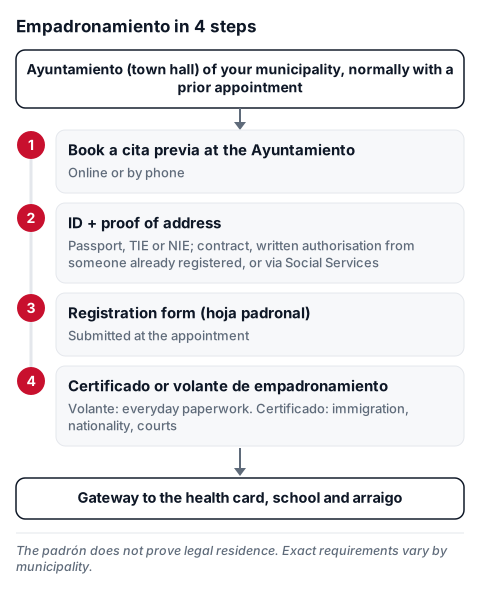
Steps
- Book a cita previa at your Ayuntamiento (online or by phone).
- Gather documents: ID (passport, TIE or NIE) and proof of address (contract, or written authorisation from someone already registered, or via Social Services if you have no fixed home).
- Attend the appointment and submit the registration form (hoja padronal).
- Collect the certificado or volante de empadronamiento.
Official source: Resolución of 17 February 2020 — technical instructions on Padrón management (BOE-A-2020-4784) and INE — Padrón municipal. Informational only; check the official source and a professional for your specific case.
